

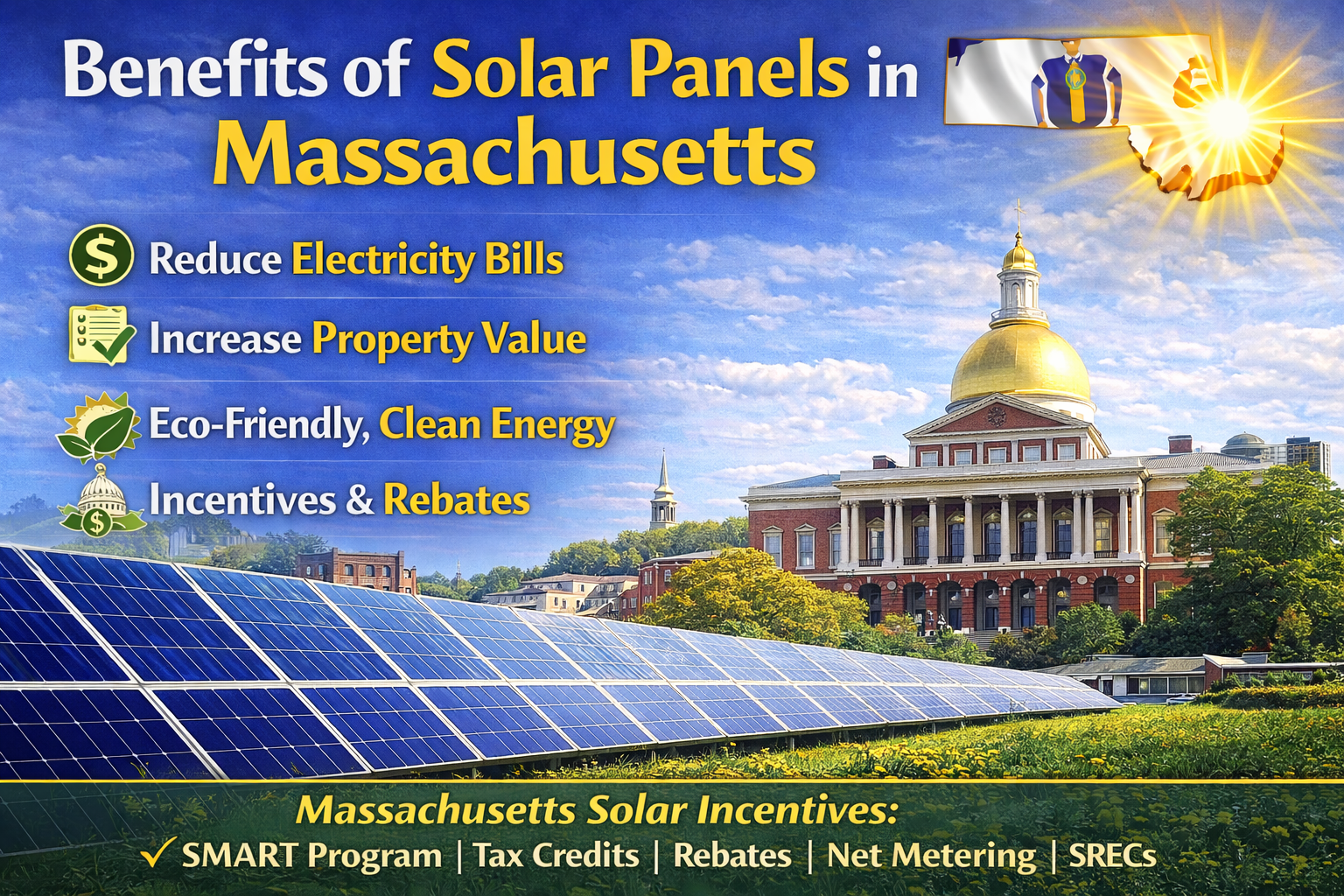
Benefits of Solar Panels in Massachusetts
Solar panels are transforming energy use in Massachusetts. They offer a clean, renewable energy source that benefits both the environment and your wallet.
Massachusetts is a leader in solar energy adoption. The state provides numerous incentives to make solar panel installation more affordable.
Residents can enjoy significant savings on electricity bills. Solar panels also increase property value, making them a smart investment.
The environmental benefits are substantial. Solar energy reduces carbon footprints and helps combat climate change.
With strong policies and community support, Massachusetts is paving the way for a sustainable future. Solar panels are a key part of this green revolution.
Why Massachusetts Is a Leader in Solar Energy
Massachusetts stands out in the solar energy landscape. The state ranks highly in solar energy adoption nationwide. This is no small feat considering its geographic location.
The state government plays a big role. They have implemented robust policies and incentives to promote solar energy use. This has created a favorable environment for both consumers and installers.
Here’s why Massachusetts excels in solar energy:
- Innovative incentive programs
- Supportive policies like the Renewable Portfolio Standard
- Strong community of advocates

The Solar Massachusetts Renewable Target (SMART) Program is a key driver. It provides financial incentives that boost solar energy adoption. This program is a clear demonstration of the state’s commitment to renewable energy.
Additionally, Massachusetts benefits from a competitive solar market. This allows consumers to choose from a variety of options when it comes to solar panels and installation services. The state’s dedication and strategic planning make it a leader in solar energy, setting an example for other regions to follow.
Key Financial Benefits of Solar Panel Installation
Installing solar panels in Massachusetts offers a range of financial benefits. These benefits make solar a wise investment for homeowners and businesses alike. Let’s explore what makes solar financially attractive.
One of the most compelling financial advantages is the reduction in electricity bills. Solar panels generate electricity, decreasing the amount you need from the grid. This means significant savings each month.
Massachusetts residents also enjoy financial incentives. These include federal tax credits and state-specific rebates. Such incentives lower the initial cost of solar panel installation.
Here’s a breakdown of financial benefits:
- Lower energy bills over time
- State and federal tax incentives
- Increase in property value
- Potential income from selling excess energy

Net metering adds another financial layer. It allows you to sell excess energy back to the grid. This turns your home or business into a mini power station.
Additionally, the value of your property may increase. Solar panels are an asset, enhancing property appeal and potential resale value. This is a hidden yet valuable financial perk.
Finally, with energy prices on the rise, solar energy offers stability. You can lock in lower rates, avoiding the impact of escalating electricity costs. Investing in solar panels in Massachusetts is not just an environmental decision but also a smart financial one.
Massachusetts Solar Incentives and Rebates
Massachusetts offers robust incentives and rebates to encourage solar panel adoption. These financial benefits make the state a leader in solar energy. Such incentives significantly reduce the upfront costs of installation.
One key incentive is the Solar Massachusetts Renewable Target (SMART) Program. This program offers payments per kilowatt-hour produced by solar panels. Participants receive direct compensation, boosting the financial returns of solar investments.
In addition, Massachusetts has a strong Renewable Portfolio Standard (RPS). The RPS mandates that utilities source a portion of energy from renewables. This policy supports a favorable climate for solar development.
Here’s a summary of available incentives:
- Solar Massachusetts Renewable Target (SMART) Program
- Federal Investment Tax Credit (ITC)
- Massachusetts income tax credits
- Net metering benefits
- Solar loan programs

by Nicole Gaffney (https://unsplash.com/@nicolegaffney)
Massachusetts also provides solar loan programs. These programs offer low-interest loans for solar installation, making solar more accessible to all. Loans help bridge the gap between initial costs and long-term savings.
Finally, the state supports net metering. This policy enables homeowners and businesses to receive credits for excess energy produced. Such credits can greatly reduce electricity bills over time.
By taking advantage of these programs, Massachusetts residents can lessen the financial burden of solar panel installation. The state’s commitment to renewable energy benefits both the environment and the pocketbook.
Environmental Impact and Solar Energy Benefits
Solar panels offer a substantial environmental impact by promoting clean energy. Their use helps combat climate change effectively. By reducing reliance on fossil fuels, solar energy lowers carbon footprints.
Massachusetts is committed to enhancing air quality. Solar panels contribute by reducing harmful emissions. Every kilowatt of solar energy reduces pollution, protecting the environment.
Here are some environmental benefits of solar energy:
- Decreases greenhouse gas emissions
- Conserves natural resources
- Supports biodiversity by lessening habitat disruption

by Sergey Konstantinov (https://unsplash.com/@twirl)
Massachusetts has high electricity rates, making solar a cost-effective solution. Solar energy also helps stabilize electricity costs over time. These benefits promote sustainable energy solutions across the state.
Furthermore, the adoption of solar energy generates positive community impacts. Solar panels provide energy independence and security for residents. They position Massachusetts as a leader in renewable energy initiatives.
Ultimately, utilizing solar energy reflects a commitment to future generations. Solar panels contribute to global sustainability goals and conservation. They empower individuals and businesses to take active roles in environmental stewardship.
How Solar Panels Work in Massachusetts’ Climate
Massachusetts experiences diverse weather throughout the year, which affects solar panels. Despite cold winters, solar panels perform well here. They efficiently capture sunlight even on cloudy days.
The state receives ample sunlight to support solar energy production. During sunny days, panels work optimally, converting sunlight into electricity. Snow can even enhance reflection, aiding energy capture.
Solar panels are designed for various weather conditions. They work effectively across temperature variations. Panels generate power in both winter and summer seasons.

by Brett Wharton (https://unsplash.com/@brettwharton)
Moreover, modern solar technology advances ensure resilience against weather impacts. Snow and ice generally slide off the panels. Rain helps in cleaning, maintaining efficiency over time.
In conclusion, Massachusetts’ climate supports successful solar energy production. Solar panels are versatile, ensuring consistent performance year-round. This adaptability makes them a viable choice for Massachusetts residents.
Solar Panel Installation Process in Massachusetts
Installing solar panels involves several steps, ensuring a smooth transition to clean energy. Initially, consultation with a solar provider is crucial. They assess your energy needs and property suitability.
Next, an expert visits the site for detailed evaluation. This step includes roof inspection, assessing its condition and orientation for optimal solar panel placement.
Once the plan is set, the installation process begins. Professionals handle electrical connections and mounting the panels. This ensures a safe and effective setup.
Key steps in the installation process include:
- Site assessment and consultation
- Designing a customized solar plan
- Permitting and approvals
- Installation and electrical setup
- Final inspection and activation

by Adrienne Kelley (https://unsplash.com/@amkelleydesign)
Permits are essential and managed by the installer. They coordinate with local authorities to expedite approval. Installation timelines typically vary but often complete within weeks.
After installation, systems undergo inspection before going live. This ensures compliance with safety standards. Once activated, homeowners start experiencing energy savings and eco-friendly power usage.
Choosing the Right Solar Panel Installer
Selecting a reputable solar installer is vital for a successful switch to solar energy. The installer should have extensive experience with Massachusetts regulations and climate conditions.
Before committing, research various companies. Check their customer reviews and industry certifications. Ensuring they have a track record of quality workmanship is essential.
Consider the following when choosing an installer:
- Verify licenses and certifications
- Assess customer service quality
- Review past project examples
- Compare pricing and warranty offers
Meeting with several installers can give you different perspectives. By evaluating their proposals and professionalism, you can make an informed decision. A trusted installer not only ensures a smooth installation process but also provides long-term support for your solar system.
Common Questions About Massachusetts Solar Panels
Switching to solar panels can raise many questions. Understanding the basics helps you make informed choices.
How much sunlight does Massachusetts receive? Despite its Northeastern location, Massachusetts receives enough sunlight to make solar energy viable year-round.
Are there financial incentives to install solar panels? Yes, the state offers various incentives and rebates, making solar more affordable for homeowners.
Residents often ask about maintenance costs. Fortunately, solar panels require minimal upkeep, leading to low maintenance expenses over their lifespan.
Here are some frequent questions:
- Is my roof suitable for solar panels?
- Can solar panels improve my home’s resale value?
- What is the lifespan of solar panels?
These common concerns are important to address. Learning about solar technology and state programs can ease your transition to renewable energy. Experts and resources in Massachusetts can provide tailored advice for your property.
The Future of Solar Energy in Massachusetts
Massachusetts is poised to continue its leadership in solar energy. As technology advances, the state is embracing innovation in renewable energy systems. These efforts align with global sustainability goals.
The future holds exciting potential for solar technology in Massachusetts. With strong policy support, more installations are expected, enhancing energy efficiency and environmental stewardship. These advancements promise greater economic benefits and job creation.
Solar energy’s impact will likely expand, contributing to cleaner, greener communities. The state’s dedication to renewable sources ensures continued growth and success. Massachusetts residents can look forward to a thriving solar landscape that meets both energy and environmental needs.

by Steve Pancrate (https://unsplash.com/@redaska)
Conclusion: Is Solar Right for You?
Deciding whether to install solar panels in Massachusetts is a significant choice. With so many benefits and incentives, it is a compelling option for many residents. Reduced energy bills and environmental contributions make solar an appealing choice.
Explore your energy needs and financial situation. Weigh the long-term savings and sustainability against initial costs. By considering these factors, you can determine if solar energy aligns with your goals and if it is the right energy solution for you.