

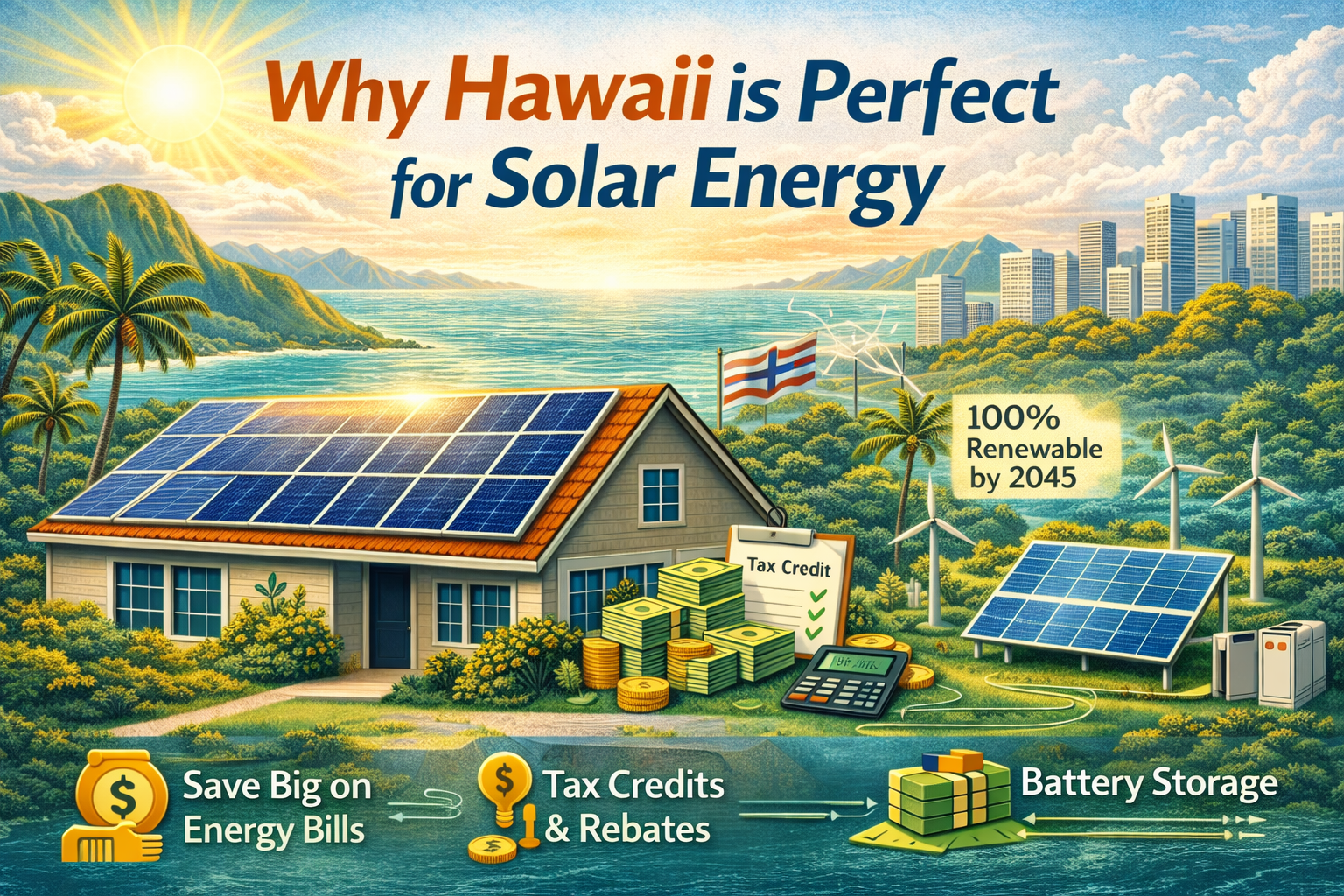
Hawaii is a paradise for solar energy. With abundant sunshine, it’s an ideal place for solar panels.
Residents can enjoy significant savings on electricity bills. Solar energy is not just cost-effective; it’s also environmentally friendly.
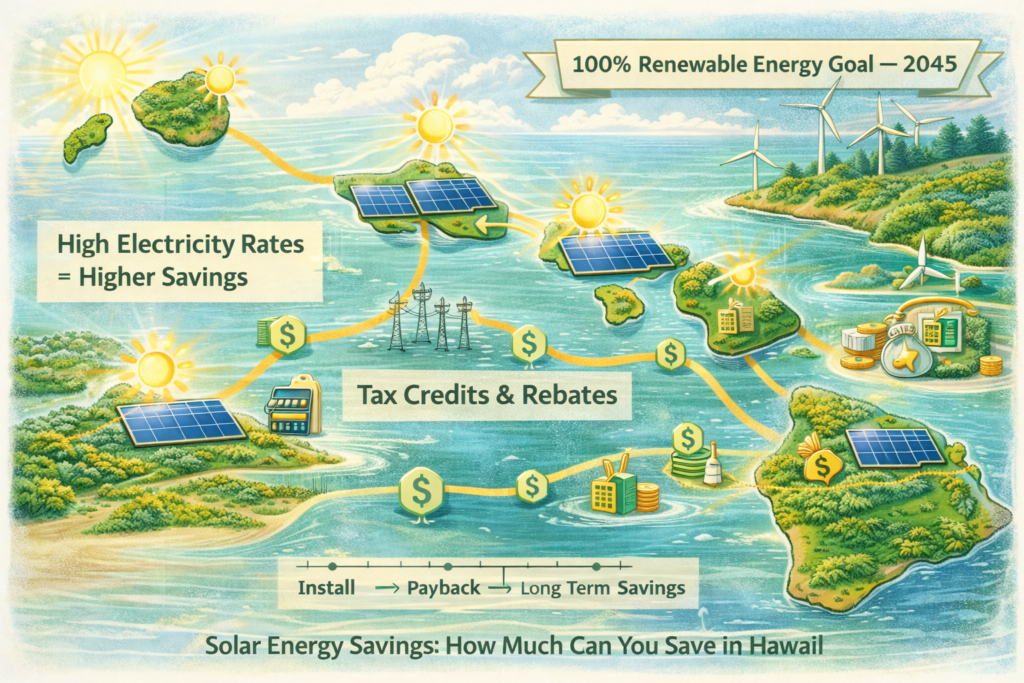
Hawaii offers attractive solar incentives, including tax credits and rebates. These incentives make solar panels more accessible to homeowners and businesses.
The state’s commitment to renewable energy is strong. Hawaii aims for 100% renewable energy by 2045, making solar a key player.
Solar panels in Hawaii are a smart investment. They increase property value and contribute to a sustainable future.

Why Hawaii Is Perfect for Solar Energy
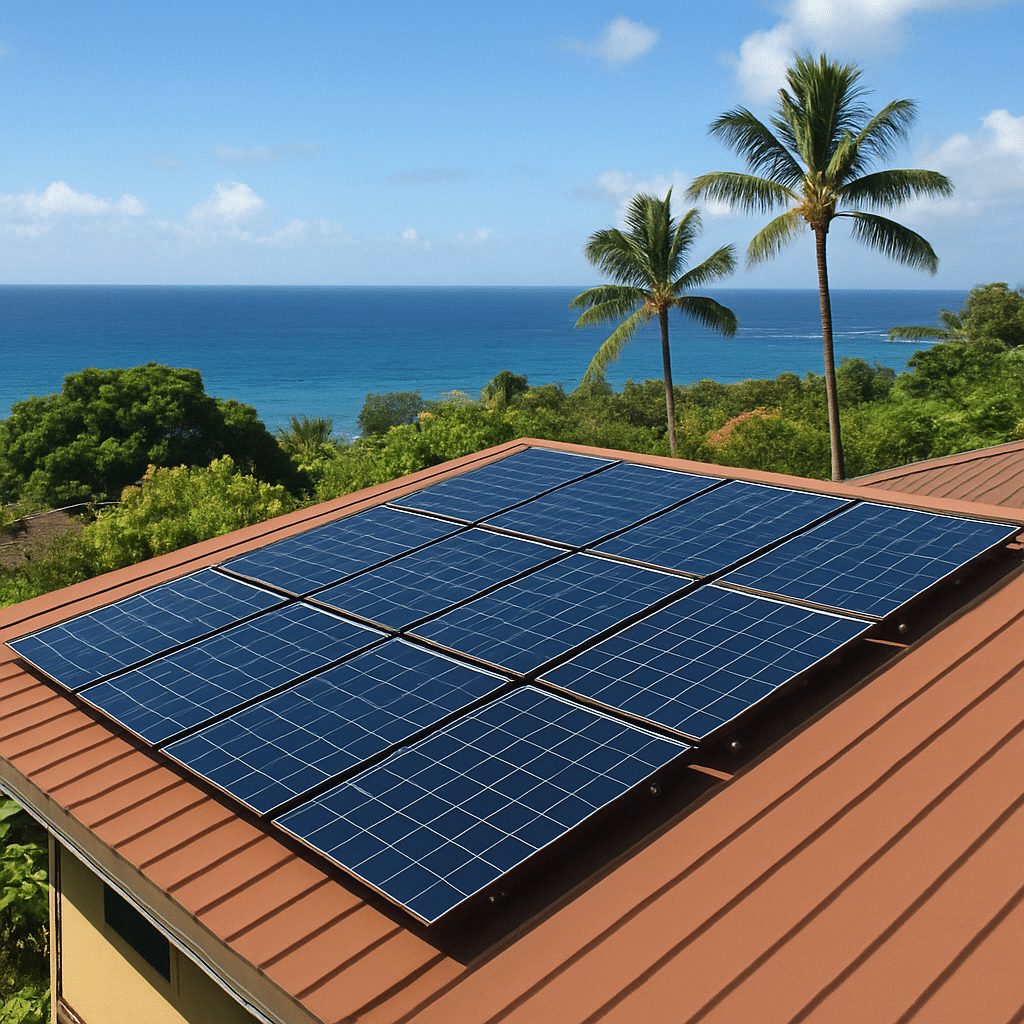
Hawaii offers plenty of sunlight year-round. This abundant sunlight makes it ideal for solar energy generation.
Solar panels thrive under these sunny conditions. They can produce significant electricity, reducing reliance on the grid.
Hawaii’s geographic location provides unique benefits. The state has long daylight hours and clear skies.
Benefits of Hawaii’s Natural Environment:
- Abundant sunshine for most of the year
- Long daylight hours
- Consistent warm climate
The state’s commitment to clean energy adds to its appeal. Hawaii aims to lead in renewable energy adoption.
Hawaii’s high electricity rates are another factor. They make solar energy a cost-effective solution for residents.
These combined factors create a perfect environment for solar investment. Residents can enjoy both financial savings and environmental benefits.

Solar Energy Savings: How Much Can You Save in Hawaii?
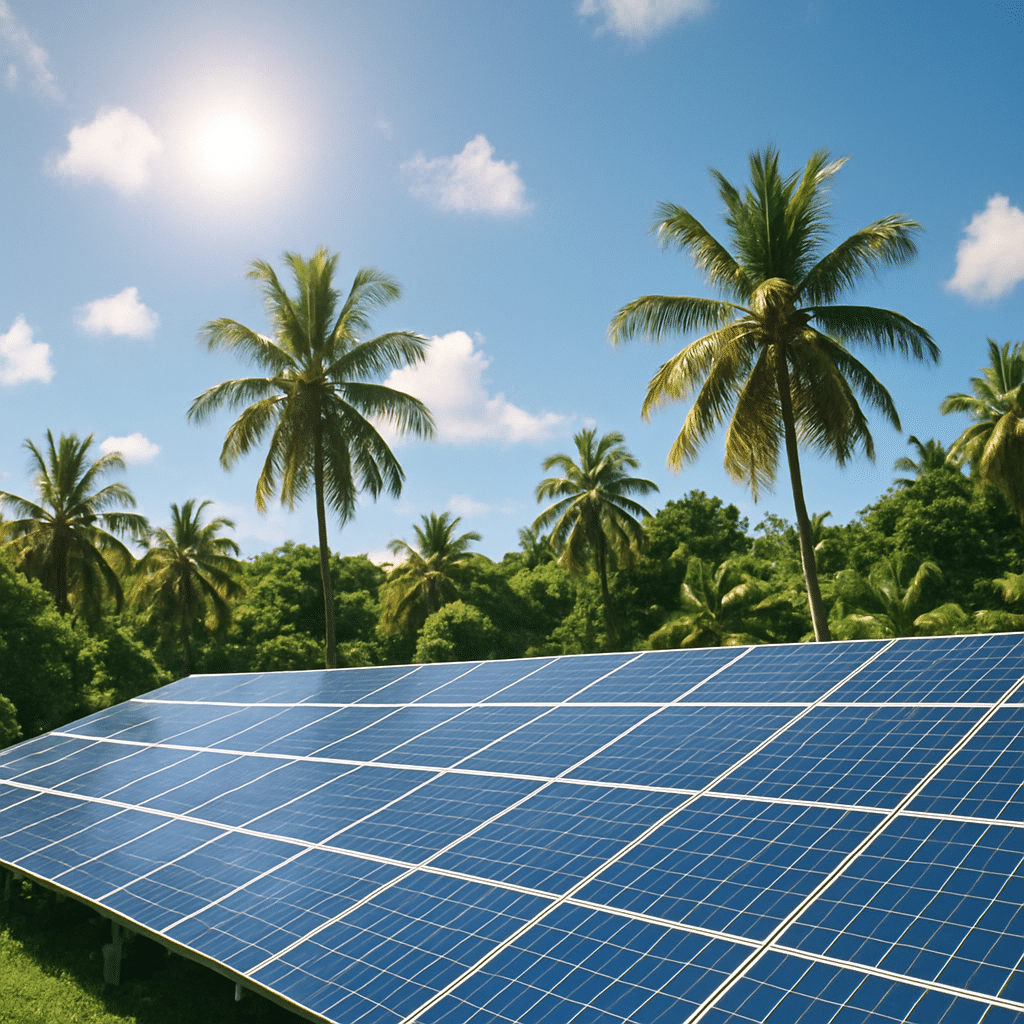
Hawaii’s high electricity rates mean major savings with solar. Residents can significantly cut their monthly energy bills.
Imagine saving hundreds each month. These savings add up quickly over years, benefiting homeowners financially.
The initial cost might seem daunting. Yet, over time, the investment pays off in decreased electricity expenses.
Each solar installation is unique. Savings depend on system size, energy consumption, and sunlight exposure.
Key Factors Affecting Savings:
- Size and efficiency of solar panels
- Household energy consumption
- Available sunlight and location
For an average home, savings can reach thousands annually. Many report cutting their electricity bills by half.
Moreover, solar panels can boost home value. Buyers see lower energy costs as an attractive feature.
Ultimately, solar energy savings in Hawaii are impressive. It’s a smart financial decision with long-term benefits.
Exploring local incentives and programs can enhance these savings further. With right planning, solar energy becomes even more advantageous.

Solar Incentives in Hawaii: Tax Credits, Rebates, and More
Hawaii offers enticing solar incentives to encourage adoption. These incentives help lower upfront costs for homeowners and businesses.
Tax credits play a significant role. Hawaii residents can benefit from state and federal tax credits for solar installations.
The federal solar tax credit covers a substantial part of installation expenses. It’s a key factor in reducing initial costs.
In addition to tax credits, various rebate programs exist. Local utilities might offer cash rebates to further decrease installation prices.
Noteworthy Incentives in Hawaii:
- State tax credits for solar systems
- Federal investment tax credit (ITC)
- Utility cash rebates
- Special financing programs
Special financing and loan programs are available for those unable to pay upfront. These options make solar accessible for more households.
Additionally, many Hawaii residents take advantage of solar leasing. Leasing reduces entry barriers, allowing immediate savings without large investments.
Access to accurate information helps maximize these benefits. Local solar companies often provide guidance on available incentives.
Understanding and utilizing these incentives can drastically reduce solar setup costs. With the right approach, solar becomes not only feasible but highly advantageous.

Understanding Hawaii Solar Panel Costs and Payback Periods
Investing in solar panels in Hawaii can be financially rewarding. Initial costs vary based on system size and specific household needs.
Typically, these costs include equipment, installation, and any additional components. Despite the high upfront expense, savings in electricity bills offset these costs over time.
The payback period for solar installations in Hawaii is relatively short. Thanks to high electricity prices and abundant sun, many systems pay for themselves in several years.
Factors Influencing Solar Panel Costs:
- Size and type of solar system
- Installation complexity
- Choice of installer
- Available incentives
After the payback period, expect continued savings. Most solar systems offer significant returns over their 25 to 30-year lifespan.
Understanding these financial aspects helps when considering solar investments. It allows residents to see solar as not just environmentally friendly but also economically sound.
Hawaii’s dedication to renewable energy supports competitive pricing. Various local installers contribute to a dynamic market, offering many choices for consumers.
Net Metering and Energy Storage: Maximizing Your Solar Benefits
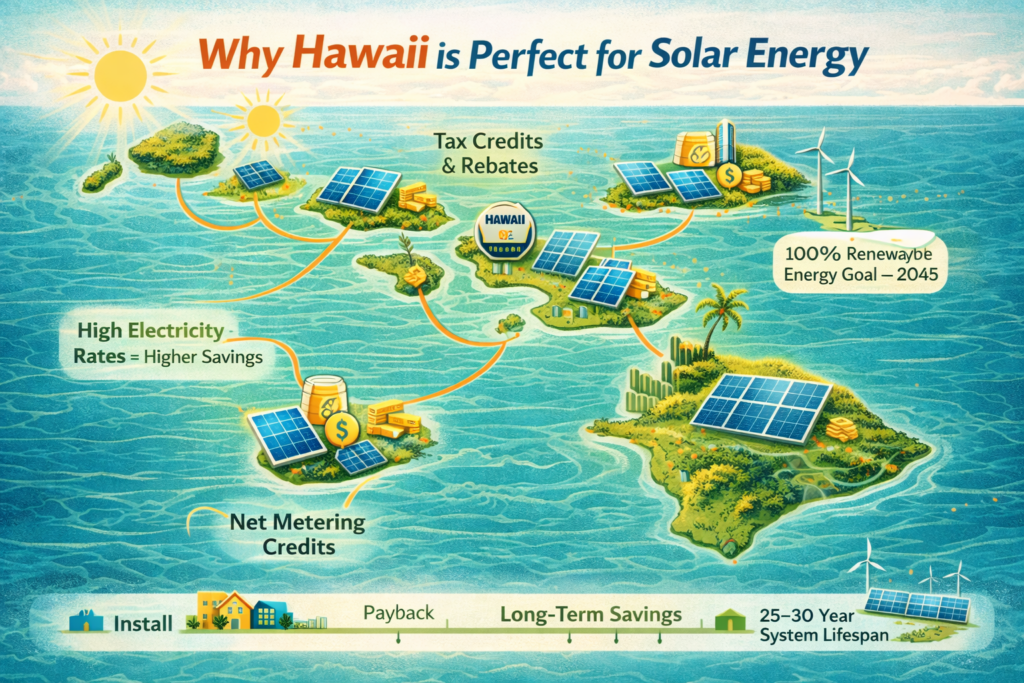
Net metering in Hawaii provides a significant advantage for solar panel owners. It allows homeowners to receive credit for excess energy their systems produce.
This credit compensates for electricity used from the grid at other times. Effectively, your meter runs backward when you generate more than you consume.
Energy storage further boosts the efficiency of solar systems. Batteries store surplus energy, ensuring power is available during outages or when the sun isn’t shining.
Benefits of Net Metering and Storage:
- Lower electricity bills
- Energy independence
- Reliable power supply
- Reduced carbon footprint
Combining net metering with storage optimizes solar energy use. It enhances financial savings and supports energy resilience in homes and businesses.
Accessing these benefits requires choosing the right storage solutions. Consult with local installers to identify options that best meet your needs and setup.
Choosing the Right Hawaii Solar Panels and Installers
Selecting the right solar panels is crucial for efficiency and long-term savings. Hawaii’s unique climate requires robust panels that withstand salt air and intense sunlight.
Consider panels’ durability and warranties when making your choice. A good warranty provides peace of mind and protects your investment.
Local solar companies understand Hawaii’s specific needs. They offer tailored solutions based on your roof type and energy goals.
Choosing the right installer is equally important. Experienced installers ensure optimal setup and system performance. Look for companies with strong reputations and good customer reviews.
Key Tips for Selecting Panels and Installers:
- Research panel efficiency and technology
- Compare warranties and guarantees
- Evaluate installer experience and certifications
- Verify customer reviews and testimonials
Proper selection leads to a successful solar installation. It ensures energy savings and enhances property value. Consult local experts to guide you in making the best choice for your solar needs.
Solar for Homes, Businesses, and Communities in Hawaii
Solar energy offers versatile solutions tailored to various needs in Hawaii. Both residential and commercial properties can benefit greatly from solar installations.
Homeowners can enjoy reduced electricity bills and increased property values. Solar panels provide energy independence, which is crucial given Hawaii’s high utility rates.
Businesses in Hawaii can significantly lower operational costs through solar adoption. This transition also enhances sustainability credentials, appealing to eco-conscious consumers.
Community solar programs are gaining traction, allowing collective benefits without individual rooftop installations. These programs are perfect for renters or properties with unsuitable roofs.
Advantages of Solar Adoption:
- Cost-effective energy solutions
- Reduced carbon footprints
- Long-term environmental benefits
- Energy independence and reliability
Hawaii’s communities embrace solar for its positive impact on their economy and environment. Collectively, they play a crucial role in Hawaii’s renewable energy movement.
Environmental and Economic Impact of Solar in Hawaii
Solar energy plays a significant role in protecting Hawaii’s natural environment. By reducing reliance on fossil fuels, solar panels help lower greenhouse gas emissions. This contributes to cleaner air and a healthier ecosystem for Hawaii’s diverse species.
Economically, solar power stimulates job creation and bolsters local businesses. The solar industry supports many jobs, ranging from installation to maintenance and sales. This sector’s growth directly boosts Hawaii’s economy by increasing employment opportunities.
Adopting solar energy also stabilizes energy costs, protecting against volatile fossil fuel prices. Residents and businesses benefit from predictable energy expenses, which can enhance financial planning.
Key Benefits:
- Reduced environmental pollution
- Job creation and economic growth
- Stable energy costs
- Increased energy security
By integrating solar energy, Hawaii ensures a sustainable and prosperous future. The island state stands as a model for renewable energy practices worldwide.
Frequently Asked Questions About Solar Panels in Hawaii
Understanding solar energy in Hawaii raises many questions. One common query is about the cost of installation. While upfront costs can vary, numerous incentives help reduce expenses.
Another frequent question concerns the lifespan of solar panels. Typically, panels last 25-30 years, providing long-term benefits. Regular maintenance can ensure optimal performance throughout their lifespan.
Many also ask about potential savings. With high electricity rates in Hawaii, switching to solar can lead to substantial savings over time.
Common Questions:
- What is the installation cost?
- How long do solar panels last?
- How much can I save on electricity?
Next Steps: How to Go Solar in Hawaii
Embarking on your solar journey in Hawaii begins with research. Understanding the benefits and costs is crucial. You’ll want to compare potential savings with current expenses.
Consult with local experts to tailor solutions to your needs. They can assess your home or business and provide customized plans for optimal energy efficiency.
Finally, explore financing options. Consider tax credits and other available incentives. This can make installation more affordable. By planning well, you’ll soon enjoy the perks of renewable energy.
Steps to Get Started:
- Research benefits and costs
- Consult with local experts
- Explore financing options and incentives