


Installing solar panels in Arizona is one of the most effective ways homeowners can reduce energy bills and gain control over long-term power costs. Arizona’s strong sunlight, rising utility rates, and available tax incentives make solar a practical option for many properties. This guide explains how solar panel installation in Arizona works, what incentives are available, and how to choose between solar companies and solar installers.
Why Installing Solar Panels In Arizona Makes Sense
Homeowners choose installing solar panels in Arizona because it provides reliable solar power and long-term savings. A properly designed solar energy system reduces how much electricity you buy from the utility. Lower usage helps stabilize energy bills and reduces your home’s carbon footprint.
Modern solar systems handle Arizona’s climate well. When solar panels are installed correctly, they produce consistent power year-round. Many homeowners also add battery storage so they can use solar power after sunset instead of exporting excess solar energy back to the grid.

Arizona Solar Incentives And Tax Credits Overview
Installing solar panels in Arizona comes with valuable tax incentives. The state offers a residential solar tax credit that can offset a portion of installation costs. In addition, many homeowners qualify for the federal solar tax credit, which reduces the total price of a solar energy system.
Arizona utilities use net billing instead of full net metering. Exported energy earns credits at a set rate. Because of this structure, a solar battery can increase savings by storing power rather than exporting it. Incentive programs change, so always confirm current tax credits before signing a contract.
Climate Suitability For Solar Panel Installation In Arizona
Arizona’s climate supports strong solar production, but heat still matters. High temperatures can slightly reduce panel output during peak summer hours. Experienced solar installers design systems based on real usage data and seasonal performance.
A solar battery improves efficiency during hot months. It stores energy when production exceeds usage. Homeowners can then use that stored power later, reducing reliance on utility pricing models.
Arizona Solar Licensing And Compliance Requirements
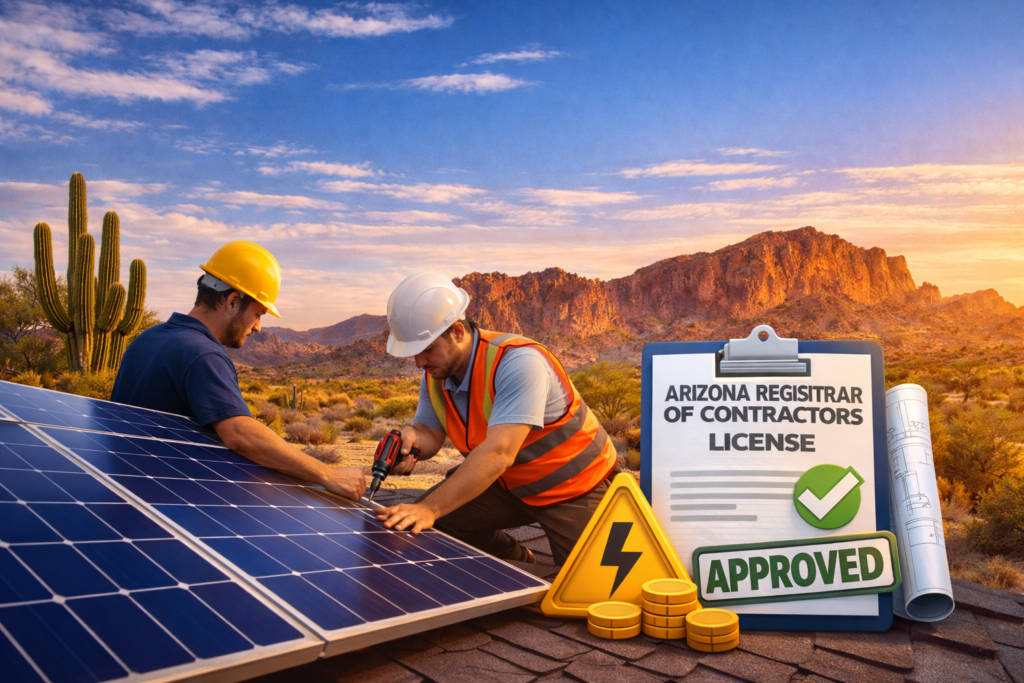
Solar panel installation in Arizona must follow state and local regulations. Contractors must hold the proper Arizona Registrar of Contractors license for residential or commercial electrical work. Permits, inspections, and utility approvals are required for every compliant installation.
Homeowners should always verify licensing and insurance when comparing solar companies. Skipping compliance steps can delay activation and increase costs, even when the solar panels cost appears lower upfront.
Solar Panels Cost And Financing Options In Arizona
The cost of installing solar panels in Arizona depends on system size, roof design, electrical upgrades, and battery storage. Clear pricing helps homeowners compare solar installers accurately.
Financing options include a solar loan, which allows ownership and access to tax incentives. Power purchase agreements offer lower upfront costs but limit incentive eligibility. Choosing the right option depends on your budget and long-term goals.
Arizona Solar City Pages
Explore local information about solar panel installation in Arizona by city:
Phoenix, Tucson, Mesa, Chandler, Scottsdale, Glendale, Gilbert, Tempe, Peoria, Surprise, Goodyear, Avondale, Buckeye, Flagstaff, Yuma, Prescott, Lake Havasu City, Casa Grande, Maricopa, Queen Creek
Start Installing Solar Panels In Arizona With Confidence
Installing solar panels in Arizona starts with accurate information and a clear plan. Whether you want lower energy bills, battery storage, or long-term solar power savings, understanding incentives, climate factors, and financing options leads to better results. Solar panels installed today can deliver value for decades.